

The True Cost of Cheap Solar Street Lights: Are We Saving Money or Compromising the Future?
2026-11-25
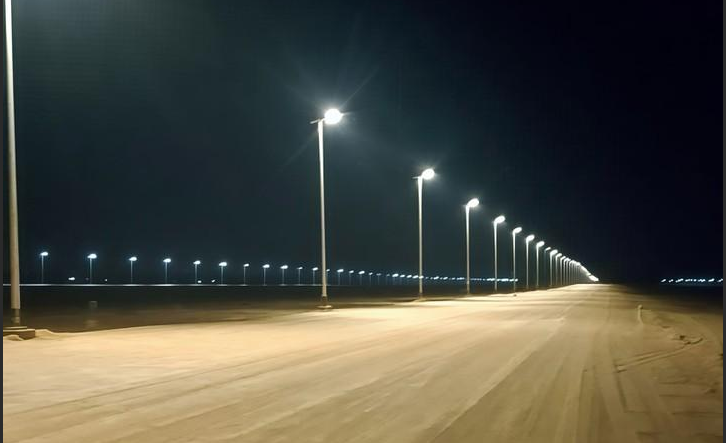
In the solar lighting industry, price competition never stops.
As more manufacturers enter the market, solar street light prices continue to decline. For distributors, engineering contractors, and government procurement departments, lower-priced products appear to offer higher profit margins, reduced project budgets, and greater competitiveness.
However, one fundamental question deserves closer examination:
When we purchase a cheap solar street light, what are we actually saving, and what are we sacrificing in return?
The purchase price is visible, while the true cost of ownership often remains hidden. Unfortunately, many purchasing decisions consider only the former.
In traditional procurement, buyers tend to compare wattage, technical specifications, warranty periods, and quotations.
If two solar street lights are both rated at 100W, look similar, and one costs 30% less than the other, choosing the cheaper option may seem entirely reasonable.
However, a solar street light is not simply a consumer product. It is an autonomous energy and lighting system.
It consists of a solar panel, an energy storage battery, an LED light source, a charge controller, an optical system, a thermal management structure, and protective components. A weakness in any of these elements can compromise the reliability of the entire system.
A rational procurement strategy should therefore focus not simply on the purchase price, but on the Total Cost of Ownership (TCO).
Total Cost of Ownership = Purchase Cost + Transportation Cost + Installation Cost + Maintenance Cost + Replacement Cost + Failure-Related Losses + End-of-Life Disposal Cost
The initial purchase price is only one part of this equation.
Technological innovation, economies of scale, supply chain optimization, and improved manufacturing efficiency can legitimately reduce product costs. Such cost reductions should be encouraged.
However, when lower prices result from compromises in essential materials, technical configurations, or quality control rather than manufacturing efficiency, the initial savings may ultimately become risks and expenses for the customer.
The battery is one of the most critical components of a solar street light and a major factor determining its service life.
Some low-cost products may use battery cells with insufficient capacity, poor consistency, or limited traceability. In some cases, advertised battery capacities may even exceed their actual capacities.
Differences in battery quality rarely become apparent on the first day of operation.
After several months or even one or two years, problems such as battery capacity degradation, reduced lighting hours, and insufficient autonomy during consecutive rainy days may gradually emerge.
At that point, the money saved by the manufacturer during production may become battery replacement, labor, and transportation expenses for the customer.
Solar lighting operates according to a fundamental principle: energy balance.
Over the long term, the energy consumed each day cannot exceed the amount of energy the system can effectively collect and store.
If the solar panel is undersized, even a large-capacity battery may struggle to maintain the required lighting duration.
Similarly, if the battery capacity is insufficient, even a highly efficient solar panel cannot provide adequate autonomy during several consecutive days of unfavorable weather.
Professional solar lighting system design must consider:
Local solar irradiation conditions
Actual LED power consumption
Daily operating hours
Battery energy storage capacity
System energy losses
Consecutive days of unfavorable weather
None of these engineering challenges can be solved by exaggerated wattage labels.
The market is filled with solar street lights claiming hundreds or even thousands of watts of power.
However, wattage represents electrical power, not actual lighting performance.
For professional road lighting projects, more meaningful indicators include:
Actual luminous flux (lm)
Luminaire luminous efficacy (lm/W)
Road surface illuminance (lux) or luminance
Lighting uniformity
Glare control
Long-term lumen depreciation
If a luminaire cannot meet the required road lighting standards at the specified mounting height and pole spacing, it fails to fulfill its intended purpose, regardless of its advertised wattage or attractive price.
Stainless steel screws, anti-corrosion coatings, waterproof cable glands, battery thermal insulation, protective foam, high-quality sealing materials, and reliable battery mounting structures rarely receive much attention when buyers compare quotations.
Yet solar street lights must withstand years of exposure to high temperatures, ultraviolet radiation, heavy rain, dust, salt-laden environments, and repeated temperature fluctuations.
Deteriorating seals may allow water ingress. Corrosion may compromise structural integrity. Prolonged exposure to high temperatures may accelerate battery degradation.
A seemingly insignificant difference in material costs during procurement can translate into dramatically different performance after several years of outdoor operation.
The true value of an industrial-grade solar street light often lies in the details that customers cannot see at first glance.
Solar street lights do not incur the electricity costs associated with conventional grid-powered lighting. However, this does not mean their operating costs are zero.
When a solar street light installed at a height of 8, 10, or even 12 meters develops a fault, replacing a component worth only a few dozen dollars may require specialized technicians, aerial work platforms, traffic management, and transportation across considerable distances.
Some all-in-one solar street lights may even require the entire luminaire to be removed before the battery or controller can be replaced.
In remote areas, highway projects, and large-scale municipal installations, the cost of a maintenance intervention may significantly exceed the value of the defective component itself.
This is why modular designs, external controllers, drawer-style battery compartments, and standardized components have considerable economic value.
Good engineering should consider not only how a product is manufactured and installed, but also how it will be maintained years later.
Ease of maintenance is not an optional feature. It is an essential part of a product's economic value.
Consider a hypothetical road lighting project requiring 1,000 solar street lights with a planned operating period of five years.
Two procurement options are available:
| Cost Item | Option A: Low-Cost Product | Option B: High-Reliability Product |
|---|---|---|
| Unit purchase price | $100 | $150 |
| Initial purchase cost | $100,000 | $150,000 |
| Initial installation cost | $30,000 | $30,000 |
| Complete luminaires replaced over five years | 600 | 100 |
| Luminaire replacement cost | $60,000 | $15,000 |
| Replacement installation cost | $18,000 | $3,000 |
| Other maintenance and management costs | $15,000 | $5,000 |
| Total five-year cost | $223,000 | $203,000 |
The figures above represent a hypothetical cost model intended solely to illustrate the concept of Total Cost of Ownership. They are not actual project statistics or industry-average failure rates.
Although Option B has a 50% higher initial purchase price, its total five-year cost is lower under these assumptions.
Furthermore, this calculation does not include potential safety risks caused by lighting interruptions, project delays, customer complaints, contractual penalties, or damage to business reputation.
Of course, a higher price does not automatically guarantee higher quality, just as a lower price does not necessarily indicate poor quality.
Buyers must validate these assumptions through actual product testing, supplier audits, and reliability data.
The objective is not to purchase the most expensive product, but to select a solution that consistently meets lighting requirements at a reasonable total lifecycle cost.
For solar street light distributors, selling low-cost products may generate attractive short-term profit margins.
However, when products repeatedly fail during the warranty period, distributors must handle customer complaints, coordinate after-sales services, absorb replacement expenses, and potentially lose future orders.
For engineering contractors, the situation is even more complicated.
Road lighting projects typically involve project acceptance procedures, quality guarantees, maintenance responsibilities, and long-term operational requirements.
If a significant number of luminaires fail to operate properly, contractors may face additional expenses while also damaging their chances of securing future contracts.
For municipal authorities, lighting failures may affect nighttime road safety and the quality of public services.
The money saved by the procurement department may ultimately become a financial burden for maintenance departments, contractors, distributors, or even the general public.
This transfer of costs is one of the most overlooked consequences of procurement strategies focused exclusively on price.
A low-priced order may generate a transaction, but reliable products build lasting business relationships.
Three-year, five-year, and even longer warranties have become common selling points in the solar lighting industry.
However, the length of a warranty does not, by itself, demonstrate that a product can operate reliably throughout that period.
Buyers should also ask:
Does the warranty cover the battery and controller?
Is battery capacity degradation covered?
Who pays for the international transportation of replacement components?
Who covers the cost of removal and reinstallation at height?
Can the manufacturer provide compatible spare parts in the long term?
Does the supplier have genuine R&D, manufacturing, and after-sales capabilities?
A warranty is a compensation mechanism after a failure occurs. Quality control is a preventive risk management mechanism.
Rather than simply offering replacements after products fail, a more valuable approach is to minimize the probability of failure in the first place.
This is why reliable manufacturers continuously invest in research and development, testing equipment, raw material management, and production quality control.
At Guohui Lighting, we frequently face an important question:
If customers may never see a particular structural detail, why should we increase manufacturing costs to improve it?
Examples include:
Adding thermal insulation to protect batteries.
Incorporating protective foam to reduce mechanical impacts.
Adopting more reliable waterproof sealing methods.
Using stainless steel fasteners.
Establishing professional photometric laboratories.
Conducting high- and low-temperature tests.
Performing salt spray and vibration tests.
Carrying out long-term outdoor performance testing.
All these measures increase manufacturing costs.
However, from a product lifecycle perspective, the objective of these investments is not to make customers purchase more expensive solar street lights, but to reduce unnecessary expenses in the future.
Guohui Lighting has also established its own LiFePO4 battery pack manufacturing facility to improve control over battery quality, consistency, and traceability.
Our GH-LKX series features an integrated external MPPT controller and a side-access, drawer-style battery compartment, incorporating maintenance efficiency into the product from the initial design stage.
We believe a manufacturer's competitiveness should not be measured solely by its ability to reduce today's production costs, but also by its ability to reduce tomorrow's operating costs for customers.
Solar lighting is widely regarded as a more sustainable lighting solution.
However, if a solar street light must be discarded after a relatively short period of operation, manufacturing, packaging, transporting, and installing a replacement product also consumes raw materials and energy.
The premature disposal of lithium batteries, electronic controllers, solar panels, and other components places additional pressure on recycling and waste management systems.
The environmental value of a solar product depends not only on the type of energy it uses, but also on how long it can continue to provide an effective and useful service.
Extending product service life, improving component replaceability, and reducing unnecessary disposal of complete luminaires are important steps toward more sustainable lighting.
Truly sustainable lighting should not only use clean energy but also minimize unnecessary resource consumption.
Instead of simply asking suppliers about price and wattage, buyers should seek answers to the following questions:
What are the actual LED power consumption, luminous flux, and luminaire efficacy?
Can the manufacturer provide complete photometric test reports and light distribution files?
What is the actual rated power of the solar panel?
What is the actual battery energy capacity in Wh, and under what conditions has its cycle life been tested?
Can the system be configured according to local solar irradiation conditions?
Does the product feature reliable waterproofing, corrosion protection, and thermal management?
Can essential components such as the battery and controller be replaced easily and independently?
Does the manufacturer have a comprehensive production, testing, and quality control system?
Are there real-world project references with verified long-term operating performance?
What is the expected total project cost throughout its intended service life?
These questions are far more valuable in making an informed procurement decision than simply asking how much a solar street light costs.
There is nothing inherently wrong with a low price.
Making high-quality solar lighting more affordable through technological innovation, large-scale manufacturing, and supply chain optimization should be a common goal across the industry.
However, when lower prices are achieved by sacrificing performance, reliability, service life, and ease of maintenance, the apparent savings merely transfer today's expenses into the future.
A mature procurement decision should focus not only on how much it costs to purchase a solar street light, but also on how much it costs to obtain years of consistent, reliable lighting that meets the project's requirements.
What we should be purchasing is not simply a solar street light, but the lighting value it delivers throughout its entire service life.
That is the true measure of whether a solar street light is economically competitive.
Guohui Lighting — Guohui Leads the Way, Lighting the Future.
Professional Solar Street Light & LiFePO4 Battery Pack Manufacturer Since 2010.
Product
Project
About
Contact us
7F,Bldg. A,Hytera Park,3 Baolong 4th Rd,Longgang,Shenzhen,China