

Why Battery Thermal Insulation Matters in Solar Street Lights: A Small Detail with Long-Term Benefits
2026-11-23
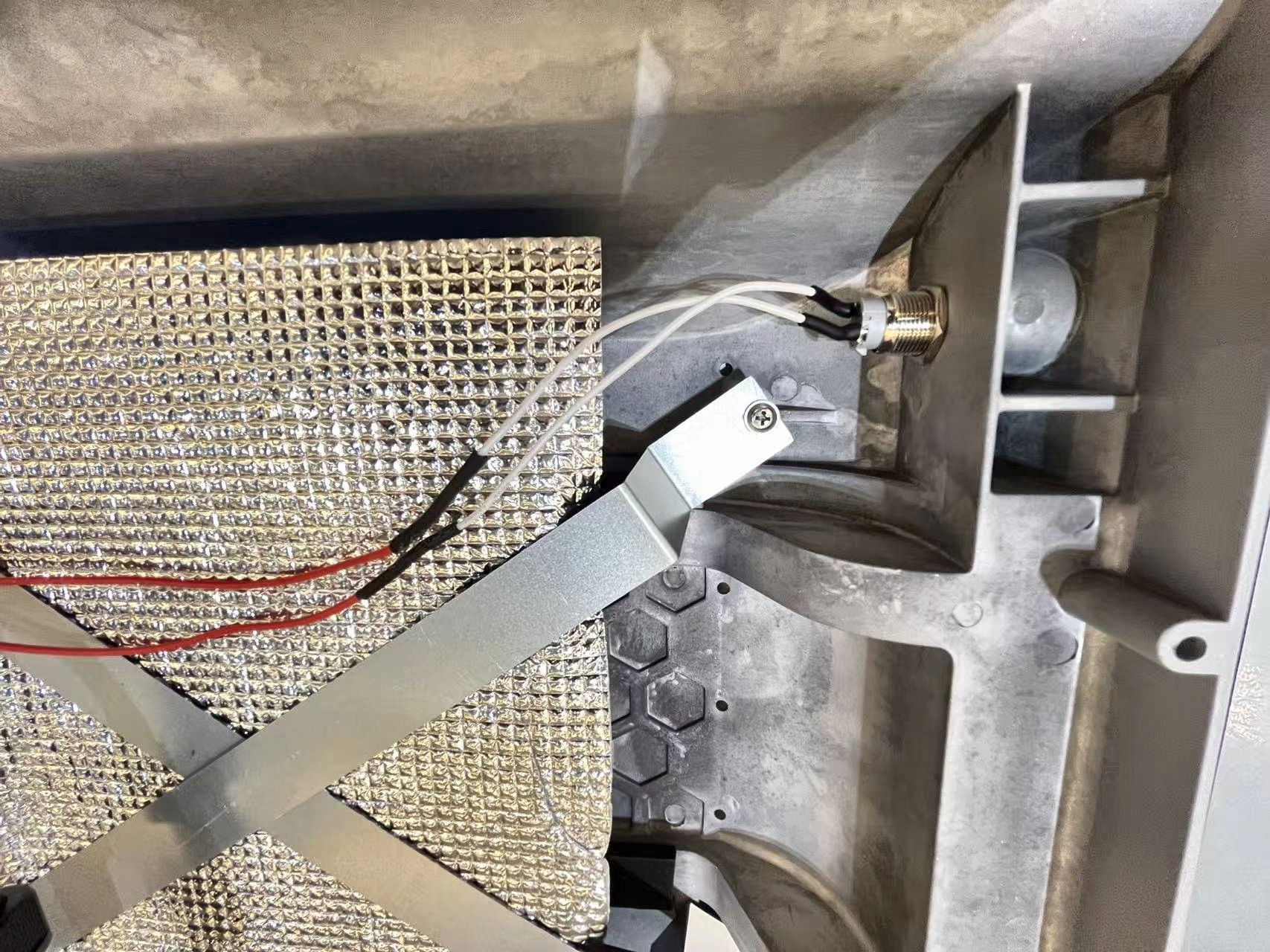
When choosing a solar street light, most buyers focus on LED wattage, solar panel efficiency, battery capacity, and lighting performance. However, one critical factor is often overlooked: battery thermal protection.
For solar street lights operating outdoors year after year, managing heat inside the battery compartment can play an important role in maintaining reliable performance and extending battery service life.
At Guohui Lighting, we believe that reliable solar street lights are built through careful attention to every component, including those customers may never see after installation.
That is why we invest in an additional layer of thermal insulation around the LiFePO4 battery compartment, even though it increases manufacturing costs.
Solar street lights are exposed to direct sunlight for many hours each day, especially in tropical and desert regions.
Under strong sunlight, the temperature of the lighting housing can rise significantly above the surrounding air temperature. Heat can then transfer from the housing toward internal components, including the lithium battery pack.
By installing an appropriate thermal insulation layer between the heated housing and the battery compartment, manufacturers can reduce certain forms of heat transfer.
At Guohui Lighting, reflective thermal insulation material is incorporated into selected solar street light designs to provide an additional thermal barrier for the LiFePO4 battery pack.
This design is particularly relevant for solar street lighting projects in regions with intense sunlight and high ambient temperatures.
Key benefit: Reduced exposure to external heat sources and improved battery thermal protection.
LiFePO4 batteries are widely used in modern solar street lights because of their long cycle life, thermal stability, and safety characteristics.
However, even high-quality lithium iron phosphate batteries are affected by operating temperature.
Prolonged exposure to excessive heat can accelerate battery aging, contribute to capacity degradation, and affect long-term energy storage performance.
Proper thermal management helps reduce unnecessary thermal stress and supports more favorable operating conditions for the battery pack.
By adding thermal insulation to suitable areas of the battery compartment, Guohui Lighting aims to limit external heat exposure and protect one of the most valuable components in a solar street lighting system.
The actual improvement depends on the insulation material, installation structure, ambient conditions, and battery operating profile.
Key benefit: Better thermal protection can help support battery capacity retention and long-term service life.
A solar street light depends on its battery to store energy collected during the day and supply electricity throughout the night.
As a battery ages, its usable capacity gradually decreases. This can reduce the available energy for nighttime lighting, particularly during extended cloudy or rainy periods.
Battery thermal protection is therefore not just about protecting the battery itself. It is also connected to the long-term reliability of the entire solar lighting system.
By reducing unnecessary exposure to external heat, a properly designed thermal insulation system may help slow temperature-related battery degradation.
For municipal roads, rural highways, industrial parks, and commercial lighting projects, consistent nighttime operation is an important consideration.
Key benefit: Supporting battery health helps preserve the energy storage performance required for dependable nighttime illumination.
For large-scale solar street lighting projects, the initial purchase price is only part of the total investment.
Solar street lights are often installed on poles several meters above the ground. When a battery fails prematurely, maintenance may require specialized equipment, technicians, transportation, and replacement components.
These costs can become significant when hundreds or thousands of solar street lights are installed across a city or highway.
Investing in better battery protection during manufacturing can be a sensible approach to reducing long-term maintenance risks.
Although thermal insulation adds material and assembly costs, it is intended to protect battery performance and support long-term product reliability.
For contractors, distributors, and municipal project developers, this reflects an important principle:
A reliable solar street light should be evaluated by its total cost of ownership, not simply its initial purchase price.
Solar street lighting systems must operate under a wide range of environmental conditions.
In many regions of Africa, the Middle East, Southeast Asia, and Latin America, intense sunlight and high daytime temperatures present challenges for battery thermal management.
An appropriate thermal insulation design can help limit heat entering the battery compartment from external sources.
However, insulation must be integrated carefully into the overall product structure. It should not excessively restrict the dissipation of heat generated by the battery itself.
Effective battery thermal management requires consideration of housing materials, internal layout, thermal insulation, ventilation, battery positioning, and operating conditions.
At Guohui Lighting, we approach solar street light design as an integrated system rather than a collection of individual components.
Key benefit: A carefully engineered insulation structure can provide additional thermal protection for solar street lighting applications in challenging climates.
Adding thermal insulation may seem like a minor modification, but it requires additional materials, manufacturing procedures, and installation time.
For manufacturers focused solely on minimizing production costs, such details may be easy to overlook.
At Guohui Lighting, we take a different approach.
We believe that the long-term reliability of a solar street light depends on the quality of its internal components and the care taken during manufacturing.
Our approach includes:
In-house LiFePO4 battery pack production, allowing better coordination between battery design and solar lighting system requirements.
High-quality battery cells selected for reliable energy storage performance.
Additional thermal insulation in selected designs to reduce external heat exposure.
Secure battery mounting structures to help maintain battery stability during transportation and operation.
Waterproofing and structural protection to improve durability in outdoor environments.
Strict quality control and testing throughout the manufacturing process.
These details may not be immediately visible from the outside, but they reflect our commitment to manufacturing reliable solar lighting products.
We would rather invest more attention and resources during production than overlook details that could affect long-term performance.
When sourcing solar street lights for commercial or municipal projects, buyers should evaluate more than battery capacity and advertised operating hours.
It is also worth asking suppliers how the battery pack is protected from environmental stress.
Important considerations include battery cell quality, battery management systems, operating temperature limits, waterproofing, mechanical fixation, and thermal management.
A professional solar street light manufacturer should be able to explain how these elements work together to support reliable outdoor operation.
With experience in solar lighting manufacturing since 2008, Shenzhen Guohui Lighting Equipment Co., Ltd. provides all-in-one solar street lights, split-type solar street lights, solar LED floodlights, and customized LiFePO4 battery packs.
Our in-house manufacturing capabilities enable us to integrate battery technology, lighting performance, structural design, and quality control into complete solar lighting solutions.
We also offer OEM and ODM services for distributors, engineering contractors, and project developers worldwide.
Battery thermal insulation may be hidden inside a solar street light, but its purpose is important.
By helping reduce external heat exposure, a carefully designed insulation layer can support battery thermal protection, long-term capacity retention, and overall system reliability.
It is not a substitute for proper battery design or effective heat dissipation. Instead, it is one part of a comprehensive approach to solar street light engineering.
At Guohui Lighting, we believe that product quality is demonstrated not only by what customers can see, but also by the details built into every lighting system.
Because a reliable solar street light should not only perform well when it is installed. It should continue delivering dependable illumination for years to come.
Guohui Lighting provides professional solar street lighting solutions and customized LiFePO4 battery packs for global projects.
Whether you are sourcing solar street lights for roads, highways, industrial parks, residential communities, or municipal infrastructure, our team can help you develop a solution for your application.
Visit: https://www.szguohui.com/
Email: info@szguohui.com
Guohui Leads the Way, Lighting the Future.
Product
Project
About
Contact us
7F,Bldg. A,Hytera Park,3 Baolong 4th Rd,Longgang,Shenzhen,China