

Can Solar Street Lighting Transform Infrastructure in Developing Countries?
2026-05-08
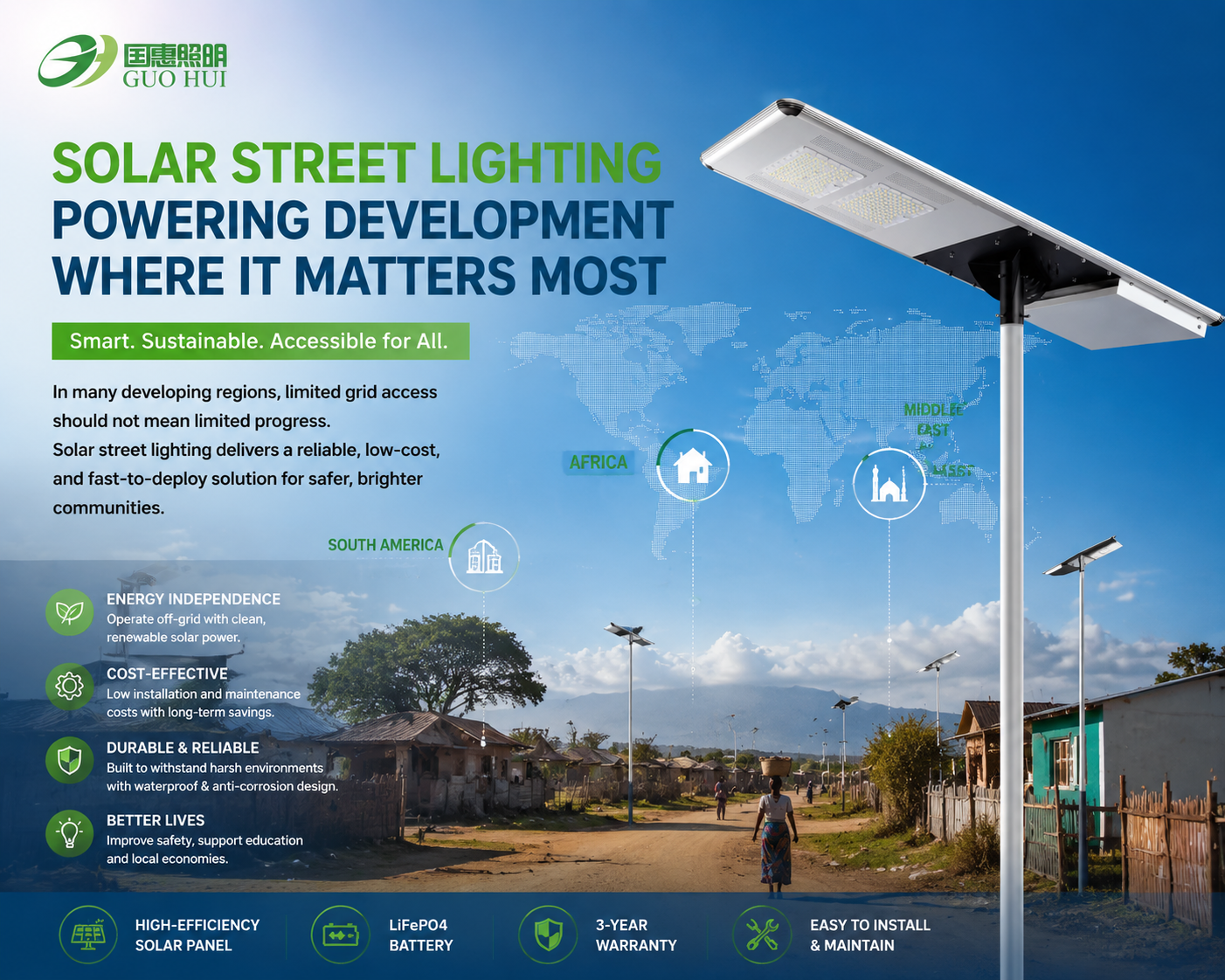
As urbanization accelerates across Africa, the Middle East, and parts of South America, cities and rural communities face a pressing challenge: limited access to reliable electricity. Traditional grid expansion is expensive, time-consuming, and often infeasible in remote or underserved regions. This is where solar street lighting emerges as a game-changer.
Solar-powered street lights offer a low-cost, sustainable, and rapid deployment solution. Equipped with high-efficiency monocrystalline or polycrystalline solar panels, LiFePO4 batteries, and LED lighting modules, these systems provide reliable illumination even in areas without grid connectivity. Smart energy management systems further optimize performance, adjusting brightness according to weather conditions, traffic patterns, or seasonal changes.
The benefits are multi-fold. For municipalities, solar street lighting reduces energy costs, lowers carbon emissions, and contributes to sustainable urban development. For communities, it enhances public safety, extends productive hours after sunset, and supports economic activity in markets, streets, and public spaces. Additionally, solar street lights can integrate IoT-enabled smart city solutions, including surveillance cameras, Wi-Fi hotspots, or environmental sensors, creating intelligent and resilient infrastructure.
Government and international development organizations increasingly recognize the role of solar lighting in achieving climate action goals and promoting green energy adoption. Incentives, subsidies, and technical support help accelerate adoption in countries where conventional electrification is limited.
In conclusion, solar street lighting is no longer just a temporary or niche solution. It is a strategic investment in sustainable infrastructure that bridges the energy gap, improves community quality of life, and drives climate-conscious urbanization in developing countries. For cities looking to embrace renewable energy, LED street lighting, and smart urban planning, solar-powered solutions offer a scalable and impactful approach.
Product
Project
About
Contact us
7F,Bldg. A,Hytera Park,3 Baolong 4th Rd,Longgang,Shenzhen,China