

The Advantages and Application Scenarios of Split Solar Street Lights
2025-12-09
As a leading manufacturer in solar lighting solutions, we've witnessed how split solar street lights are reshaping urban and rural illumination. Unlike integrated designs, their modular structure—separating solar panels from light fixtures—brings unique benefits and versatility. Here's why they're a smart choice for modern infrastructure:
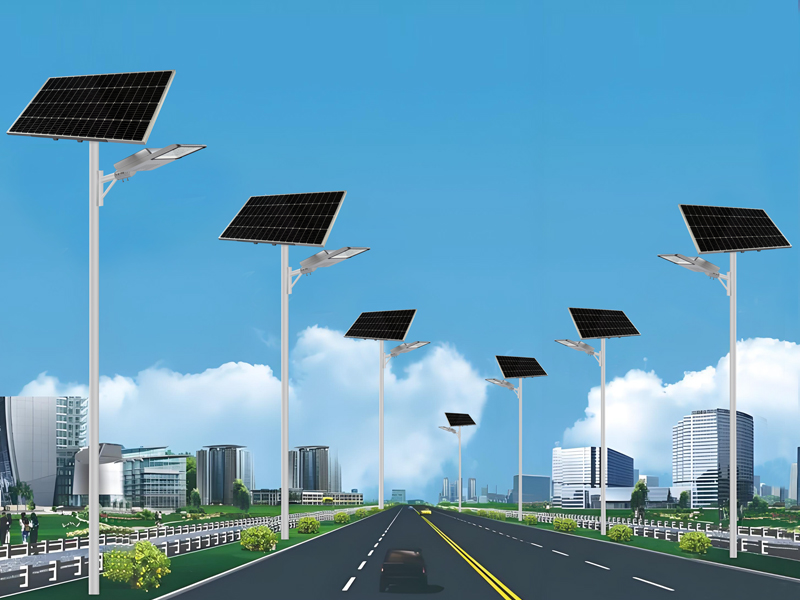
Core Advantages of Split Solar Street Lights
1. Flexible Installation for Diverse Environments
The split design breaks free from spatial constraints:
Panel-place anywhere: Mount solar panels on rooftops, poles, or sun-exposed surfaces, while fixtures install where light is needed.
Ideal for complex terrains: Perfect for mountainous areas, dense vegetation, or urban layouts with shaded spots.
Retrofit-friendly: Upgrade existing poles without replacing the entire system—simply attach panels to nearby sunlit areas.
2. Maximized Energy Efficiency
Separating components optimizes solar absorption:
Adjustable panel angles: Tilt panels to match local latitude (e.g., 30° in temperate zones) for 20–30% more energy than integrated models.
Shade avoidance: Position panels away from tree canopies or building shadows to ensure consistent charging.
Dual-panel options: Connect multiple panels to a single fixture for low-light regions, boosting battery capacity.
3. Cost-Effective Maintenance
Modular design slashes upkeep costs:
Component-level repairs: Replace faulty panels or fixtures without dismantling the entire system, cutting maintenance by 40%.
Battery protection: Fixtures (often shaded) house batteries, reducing heat exposure that causes degradation.
Easy upgrades: Swap panels for higher-efficiency models or update fixtures with smart LED modules.
4. Robust Durability
Engineered for harsh conditions:
Extreme weather resistance: Withstands 120 km/h winds and temperatures from -30°C to 60°C.
IP65 waterproof rating: Sealed against rain, dust, and humidity—ideal for coastal or tropical zones.
Key Application Scenarios
1. Smart Urban Infrastructure
City streets & highways: Retrofit existing poles with split systems for energy savings.
Parks & public spaces: Discreet panels on buildings or trees power fixtures without cluttering landscapes.
IoT integration: Add motion sensors or remote monitoring to adjust brightness in real time.
2. Rural & Off-Grid Areas
Remote villages: Provide reliable lighting without grid connection.
Highways & rural roads: Illuminate stretches without access to electricity.
Agricultural zones: Light farms, barns, or irrigation areas sustainably.
3. Commercial & Industrial Sites
Campuses & parking lots: Scalable systems for large areas.
Airports & ports: Durable designs for high-wind, high-moisture environments.
Solar-plus-storage projects: Integrate with backup power for critical infrastructure.
4. Disaster-Prone Regions
Emergency lighting: Quick-deploy systems for post-disaster relief in areas without electricity.
Why Choose Split Solar Street Lights?
Lower TCO: 30–40% cheaper than grid-powered lights over 5 years.
Faster installation: 2–3 hours per unit vs. 5–6 hours for integrated models.
Eco-impact: A 30W light saves ~1.2 tons of CO₂ annually, with 90% recyclable components.
Product
Project
About
Contact us
7F,Bldg. A,Hytera Park,3 Baolong 4th Rd,Longgang,Shenzhen,China